Overview
Creating visual content at scale has become one of the biggest challenges for marketers, bloggers, content creators, and businesses. Social media platforms, blogs, advertisements, presentations, and product pages all demand high-quality visuals consistently. However, traditional design workflows often require professional designers, expensive software, and long production timelines.
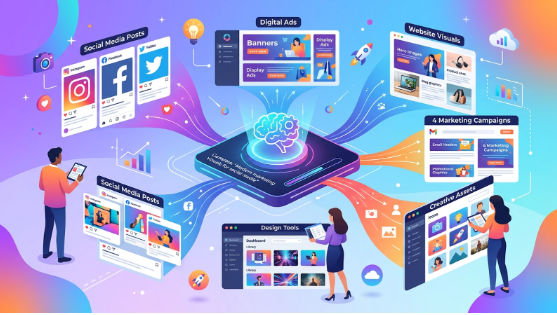
This is where AI image generators are transforming the way visual content is created. Instead of spending hours designing images manually, users can now generate unique visuals instantly using simple text prompts. These tools help teams produce graphics for marketing campaigns, blog posts, thumbnails, ads, social media posts, and more—without needing advanced design skills.
A scalable visual content system means having the ability to create large volumes of visuals quickly while maintaining consistency in style, branding, and quality. AI image generator solutions make this possible by automating much of the creative process while still allowing customization and control.
Whether you’re a content creator managing multiple platforms, a business running marketing campaigns, or a blogger producing regular posts, AI-powered visual tools can streamline production and significantly improve efficiency. By integrating the right tools into your workflow, you can generate images faster, maintain visual consistency, and scale your content creation process with ease.
Below are six AI image generator solutions that can help you build a scalable visual content system and simplify the way you create visual assets.
1. Invideo
Invideo offers an intuitive AI-powered solution that allows creators to transform simple text prompts into visually appealing images within seconds. The platform is designed to make visual creation accessible even for users with no design background, enabling them to generate unique graphics for social media posts, blog content, marketing materials, and digital campaigns. With the ai photo generator, users can quickly turn creative ideas into detailed visuals by simply describing what they want to create. This makes it easier for teams to maintain a consistent visual style while producing content at scale. Instead of relying on complex design software, creators can generate high-quality images effortlessly and integrate them directly into their content workflows.
2. Midjourney
Midjourney has become widely recognized for producing highly artistic and visually detailed images based on text prompts. It is especially popular among designers, marketers, and digital artists who want to generate visually rich and stylized graphics. The tool allows users to experiment with different artistic styles, compositions, and themes, making it useful for conceptual designs, marketing visuals, and creative storytelling. Midjourney works particularly well when teams need unique visuals that stand out in crowded digital spaces. By using descriptive prompts and adjusting style parameters, creators can produce distinctive images that align with their brand identity while maintaining creative flexibility.
3. Stable Diffusion
Stable Diffusion is a powerful open-source AI image generation model that offers significant flexibility and customization. Unlike many other tools, it allows developers and advanced users to run the model locally or integrate it into custom applications. This makes it especially useful for businesses and teams that want full control over their visual generation pipeline. With the ability to fine-tune models and generate images based on detailed prompts, Stable Diffusion supports scalable content production while allowing deeper experimentation. Organizations can also customize the model to match specific brand styles, enabling consistent image generation across large-scale marketing or content campaigns.
4. Leonardo AI
Leonardo AI is designed specifically for creators who want more control over the style and quality of generated visuals. The platform offers a range of customization features that allow users to generate images with different artistic styles, lighting effects, and compositions. It is commonly used by game designers, marketers, and content creators who need visually appealing graphics for digital projects. Leonardo AI also supports batch image generation, making it easier for teams to produce multiple variations of visuals quickly. This capability is particularly useful when testing different visual concepts for marketing campaigns or creating large sets of content assets efficiently.
5. Adobe Firefly
Adobe Firefly integrates AI-powered image generation with Adobe’s creative ecosystem, making it a valuable tool for designers who are already familiar with Adobe workflows. The tool enables users to generate images, textures, and creative assets directly from text prompts while maintaining compatibility with professional design tools. This integration allows teams to combine AI-generated visuals with traditional design editing, giving them more control over final outputs. Firefly can be particularly beneficial for brands that require polished visuals while still leveraging AI automation to speed up the creative process.
6. Ideogram
Ideogram is known for its ability to generate images that incorporate readable text within the visuals, something that many AI image generators struggle to achieve effectively. This makes it especially useful for creating posters, social media graphics, advertisements, and branding visuals where text plays an important role. By combining AI-generated artwork with integrated typography, Ideogram allows marketers and content creators to quickly produce promotional materials without requiring separate design tools. The platform helps streamline the creation of marketing visuals, making it easier to maintain efficiency when producing large volumes of branded content.
Conclusion
Building a scalable visual content system requires tools that simplify the creative process while maintaining quality and consistency. AI image generator solutions make it possible to produce high-quality visuals faster than traditional design workflows, helping teams meet the increasing demand for digital content.
By incorporating AI-powered image generation into your workflow, you can reduce production time, experiment with different visual styles, and maintain a consistent visual identity across multiple platforms. Whether you’re creating blog graphics, marketing visuals, social media images, or digital advertisements, these tools enable you to scale your content creation process effectively.
Choosing the right AI image generator depends on your specific needs, such as customization, ease of use, integration with existing workflows, or the ability to generate images in large batches. With the right combination of tools, businesses and creators can streamline visual production and focus more on storytelling, marketing strategy, and audience engagement.